
0
Fallout 4: What’s new
Once you’ve built up the kind of reputation and fan base enjoyed by Fallout it can become difficult, if not impossible, to make any significant changes without causing a backlash of apocalyptic proportions. The more popular a franchise gets, the less room there is to take creative risks and rock the boat, such is the curse of success.
Fallout 4, from what I’ve seen, is an apt demonstration of this. Its approach is one of enhancing past successes, rather than exploring new directions. Perks, shooting, levelling up, and exploration have all been boosted in some way, but only within the predefined boundaries that the audience already understands. This direction is not necessarily good or bad—it all comes down to how much you value iteration over innovation, and of course, how entertaining the thing is in the first place.
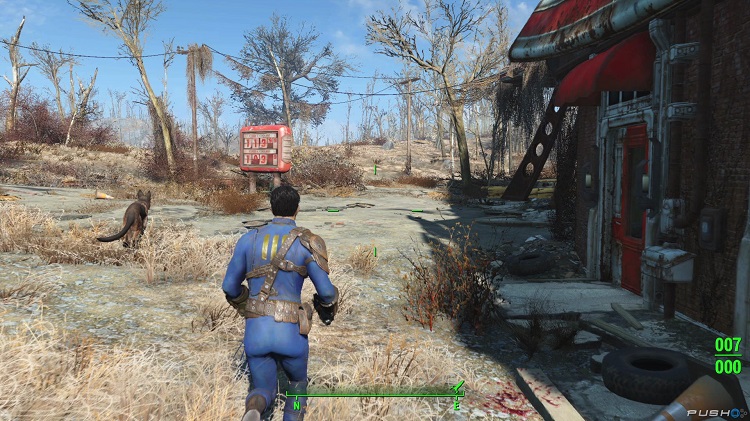
Despite the similarities, things do look more streamlined in Fallout 4 than in the past. For instance, firing weapons should be much more manageable than it was in Fallout 3. While V.A.T.S. (Vault-Tec Assisted Targeting System) is still a major part of the game—allowing you to pause the real-time combat, but at the expense of action points—you no longer need it to perform a well-aimed shot at an enemy’s point of vulnerability. The new down-the-sights aiming does a better job of replicating the feel of a first-person shooter within Fallout‘s staunch RPG design.
Bethesda’s train of thought is clear: if we bring in more accessible shooting, we’ll attract the fast-paced first-person-shooter audiences that were naturally put off by Fallout‘s insistence that combat should be slow in order to exacerbate the RPG rules of engagement. The trouble is, you can’t rely on this faster approach all of the time, and that’s going to be tough for newcomers to adapt to. Bethesda showed plenty of moments that highlighted just how difficult it is to survive without pausing the action with V.A.T.S., particularly when you find yourself surrounded.
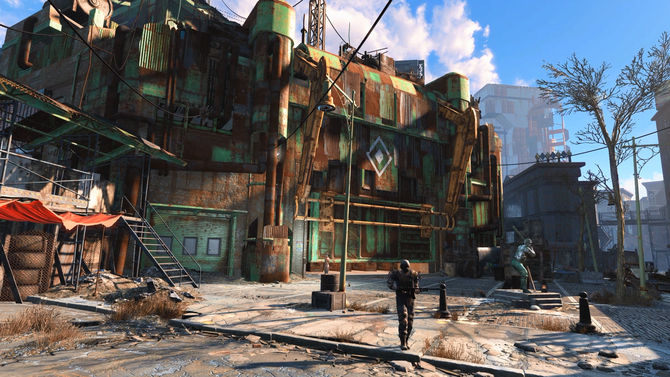
It’s also worth noting that the demo shown at Gamescom was entirely hands-off, so it’s quite possible that these improvements to real-time shooting are less natural for players who haven’t had the kind of practise that comes from working on the game. All that I can say is that, from what we were shown, it does look like ranged combat in Fallout 4 adheres much more to the standard FPS look and feel.
On the other side of the irradiated coin, though, the rules and systems governing the core RPG directives of levelling up and assigning attributes are wider and potentially more complex this time around. For starters, there’s no level cap. Once you’ve completed the main story you can continue playing and levelling up without restriction. There’s no telling how long it might take up max out all of the potential skills, but running times exceeding 400 hours have been mooted. At least you’ve got a dog to keep you company over all that time.
The same SPECIAL system of traits (strength, perception, endurance, charisma, intelligence, agility, luck) for defining your wastelander character makes a return, albeit this time with a focus on giving you more control over the skills you learn, and how your chosen path impacts how you play.
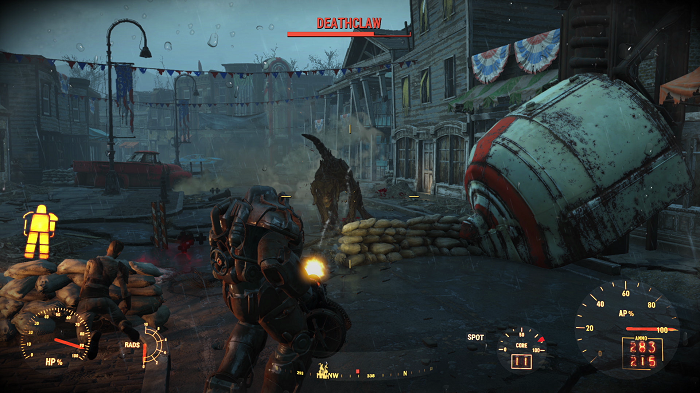
You might want to avoid any of the aforementioned shooting and instead turn yourself into a crazed individual with an unparalleled love of melee weapons, in which case you need to focus on the strength trait. This allows you to carry everything you can get your hands on without encumbering yourself to the point where you can’t move quickly. But this means you have to sacrifice points in other areas, meaning that there’s every chance your brawn-over-brains approach is going to lock you out of certain areas, relationships, and storylines that require a more cerebral approach.
Each time you level up you get a new perk, the selection defined by where you’ve spent points in the SPECIAL tree. This makes the process of leveling up more interactive and rewarding in comparison to many other RPGs, especially those that handle leveling up by merely adding +1 or +2 to a set of pre-determined attributes.
Author : Tarek Haydar
